
Our services
Request an appointment
Reserve your spot with our medical team in just minutes.
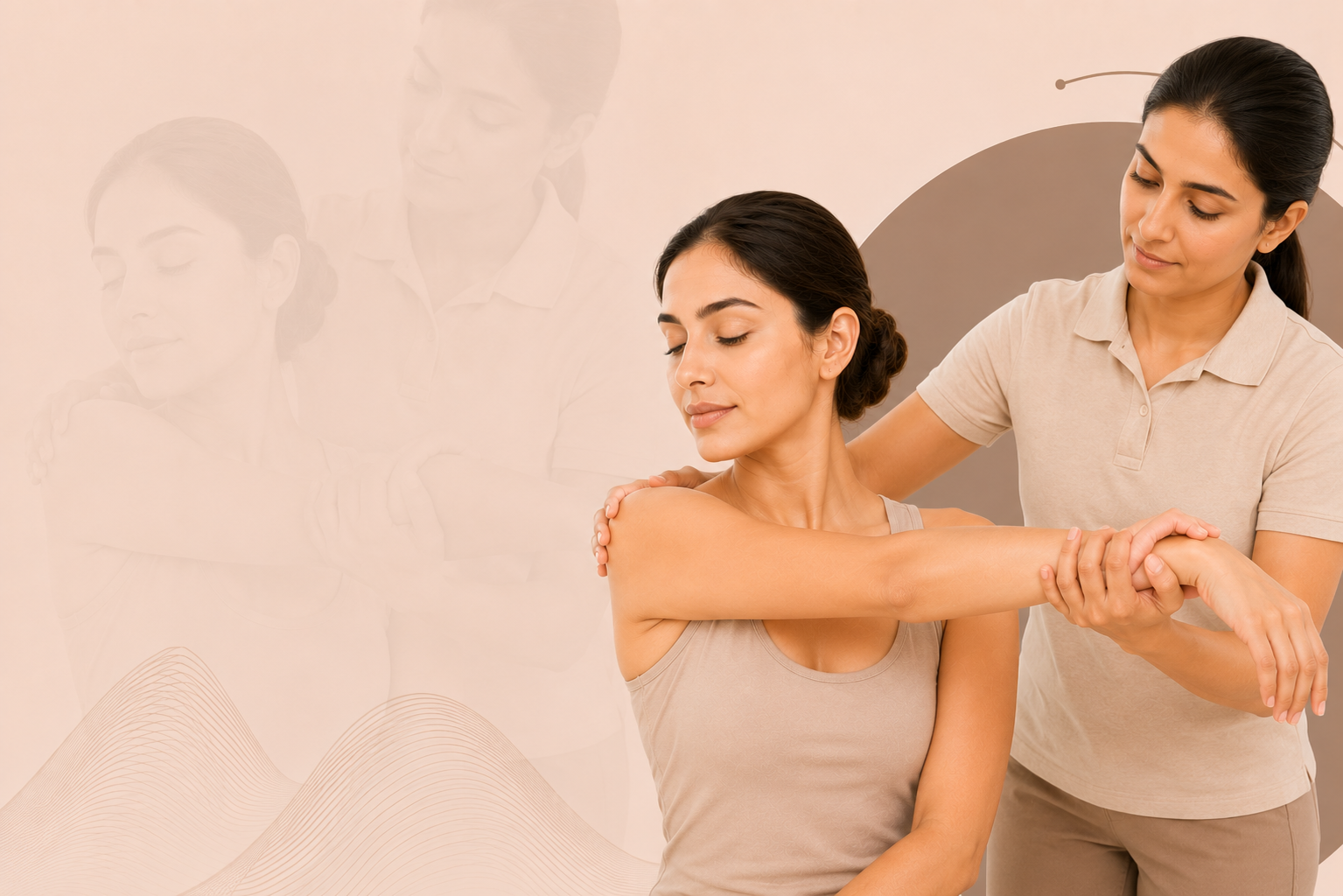
Facial Physiotherapy and Neuromuscular Retraining in Jaipur by Dr. Sushrut Kalra
Facial physiotherapy for paralysis isn't the same as generic facial exercises, it's a specialized approach called neuromuscular retraining. The facial nerve controls the muscles responsible for blinking, eating, speaking, and expressing emotion. When it's affected by conditions like Bell's palsy, trauma, or tumor removal, the brain's connection to these muscles can be disrupted.
Dr. Sushrut Kalra's rehabilitation team in Jaipur moves away from older, more aggressive exercises like chewing gum or blowing balloons, which research shows can actually increase the risk of uncoordinated movement later on. Instead, guided techniques like mirror feedback and targeted muscle coordination are used to help the brain gradually relearn natural, symmetrical facial movement.
Rehabilitation Based on Recovery Stage
-
Early Recovery In the initial weeks after paralysis begins, the focus stays on gentle care, such as protecting the eyes and maintaining natural resting posture, rather than active facial exercises, which can do more harm than good at this stage.
-
Managing Unwanted Movement As the nerve reconnects with muscles, it's common for some crossed signals to occur, causing certain muscles to move together unintentionally. Specialized retraining techniques help the brain learn to separate these movements again.
Frequently Asked Questions
It's a specialized therapy approach that uses guided, gentle facial movements and mirror feedback to help the brain relearn control over individual facial muscles.
These involve strong, generalized muscle movement that can confuse the brain's recovery process and increase the risk of long term facial tightness or uncoordinated movement.
Yes, specialized retraining techniques can help the brain gradually separate movements that have become unintentionally linked during nerve recovery.
Ideally within the first 1 to 2 weeks, starting with gentle, protective care before gradually introducing more active retraining as recovery progresses.
Yes, it plays an essential role in helping the brain learn to coordinate movement through the newly repaired or transferred nerve and muscle pathways.
This varies depending on the severity of the condition, ranging from a few months for milder cases to over a year for more complex surgical recoveries, with consistency being key to good results.