
Our services
Request an appointment
Reserve your spot with our medical team in just minutes.
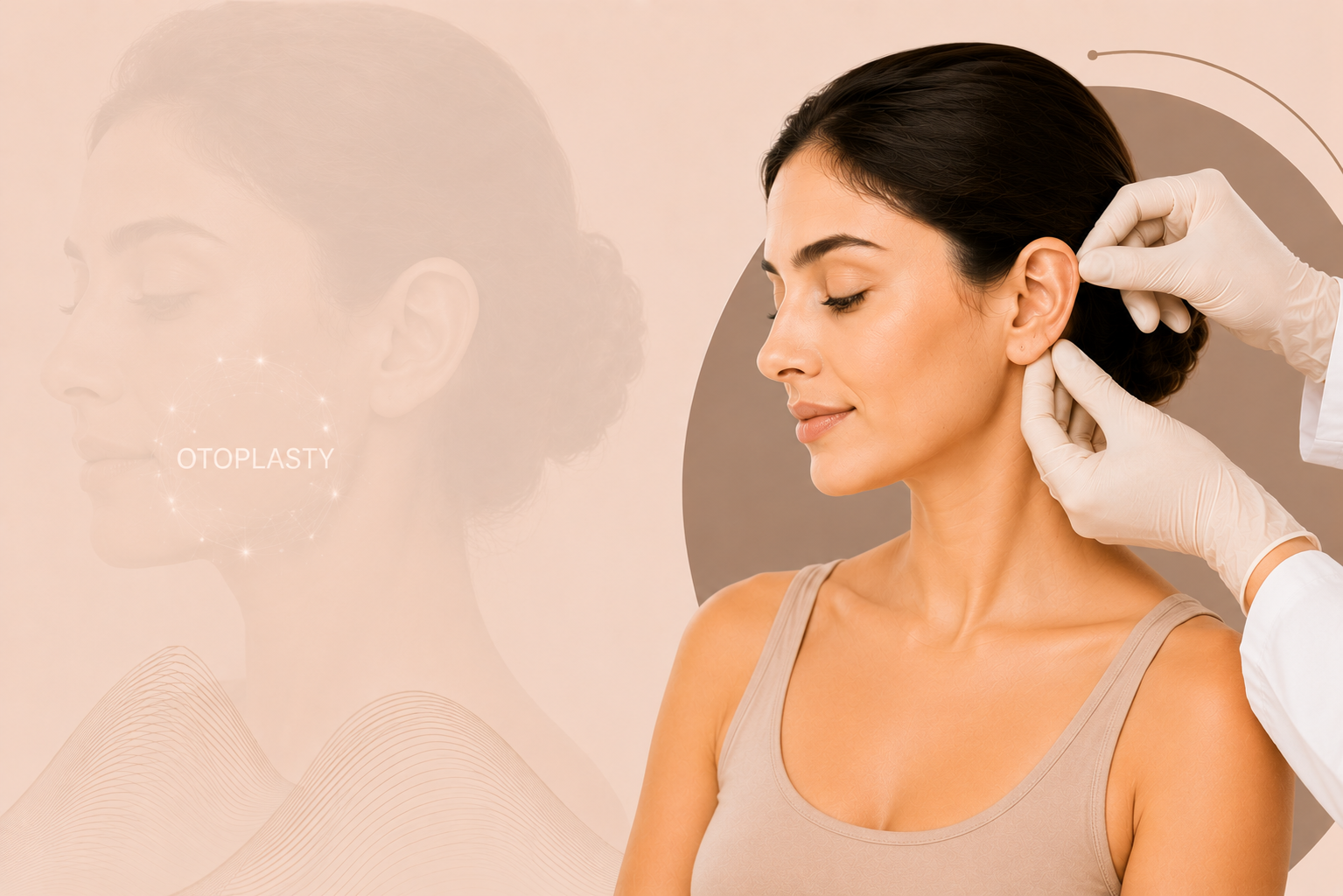
Otoplasty (Ear Pinning Surgery) in Jaipur | Ear Reshaping by Dr. Sushrut Kalra
Otoplasty, often called ear pinning or ear reshaping surgery, is a reconstructive and cosmetic procedure that reshapes the cartilage of the outer ear. It addresses issues like a flat ear fold that causes the rim to stick out, or an overdeveloped inner ear bowl that pushes the whole ear forward.
Dr. Sushrut Kalra offers advanced otoplasty in Jaipur for both children and adults. By reshaping the cartilage through incisions hidden behind the ear, the surgery restores natural facial balance without affecting hearing or leaving visible signs of surgery.
Conditions Addressed with Otoplasty Surgery
-
Protruding Ears Repositions ears that stick out noticeably from the head by securing the cartilage closer to the skull.
-
Ear Fold Reconstruction Creates or deepens the natural fold of the ear cartilage when a flat upper rim is causing the ear to stick out.
-
Reducing an Overdeveloped Ear Bowl Refines an oversized inner ear bowl to reduce how far the ear projects outward.
-
Ear Size and Shape Differences Balances mismatched ears by adjusting cartilage on one or both sides for better symmetry.
-
Birth Related Ear Conditions Corrects ear shapes present since birth, such as a constricted rim, pointed rim, or folded ear.
-
Ear Repair After Injury Repairs ear cartilage or lobe damage caused by sports injuries, accidents, or old wounds that healed poorly.
-
Hidden Incisions Behind the Ear Keeps all incisions in the natural crease behind the ear, so scars stay hidden from view.
-
A More Balanced Facial Look Helps bring the ears into better proportion with the rest of the face, easing self consciousness in social or work settings.
Frequently Asked Questions
Otoplasty mainly corrects a flat ear fold that keeps the ear sticking out, and an overdeveloped ear bowl that pushes the ear away from the head. Reshaping these areas brings the ears into better balance.
The ideal age is usually between 5 and 6 years, since the ear cartilage is nearly fully grown by then and firm enough for surgery, while still flexible enough to reshape.
No. It only involves the outer ear cartilage. The ear canal, eardrum, and inner ear structures are not touched during the procedure.
No, they stay hidden. Incisions are placed in the natural crease behind the ear, so the resulting scars aren't visible from the front, side, or back.
In most cases, yes. Treating both ears together helps achieve better symmetry and matching results, even if only one ear was originally more noticeable.
Most patients return to school or desk work within 1 to 2 weeks. A supportive headband is worn continuously for the first 2 weeks, then during sleep for another 4 weeks to protect healing.